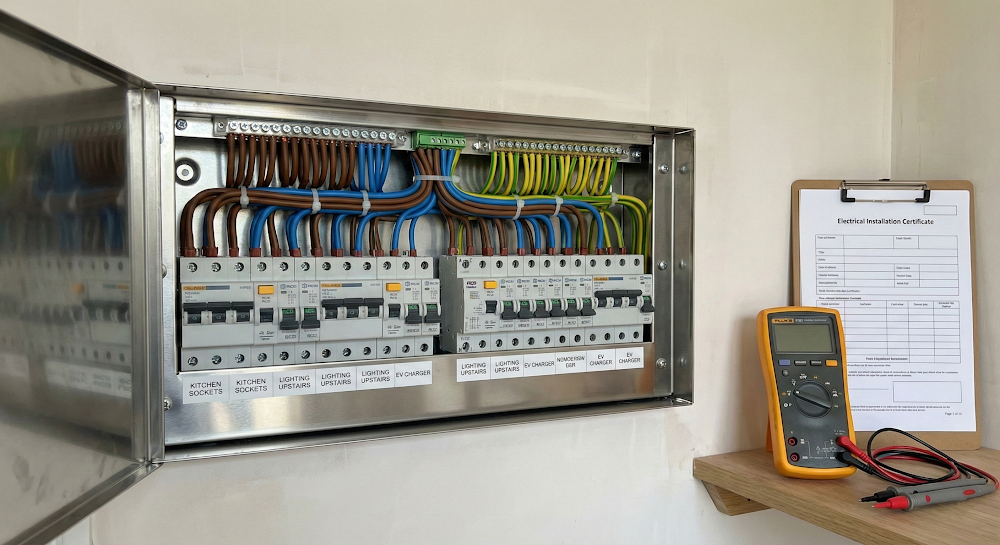
Consumer Unit Upgrades

The consumer unit distributes and protects the electrical circuits in a property. An upgrade should be based on the existing installation, the reason for the change and the results of the relevant checks—not selected from a generic online price alone.

When to enquire

This service may be relevant for

  • Homeowners concerned about an older fuse box
  • Renovations that add or alter electrical circuits
  • Properties where an inspection has identified further action
  • Landlords or buyers seeking advice after an electrical report

Define the scope

Points to confirm in writing

  • Review of the reason for the proposed upgrade
  • Checks needed to define the work accurately
  • A written description of the proposed equipment and scope
  • Confirmation of applicable testing and documentation

Enquiry process

A practical route to an agreed job

  1. 01

    Send a clear photograph of the existing consumer unit and describe the issue.

  2. 02

    We confirm what additional information or inspection is needed.

  3. 03

    The proposed scope and quotation are provided in writing.

  4. 04

    Installation and testing requirements are agreed before booking.

What a board replacement covers

What a consumer unit change does and does not fix

A modern board brings RCD protection, correctly rated protective devices, a non-combustible enclosure and usually surge protection. What it does not do is repair the circuits behind it. That distinction is the single most important thing to understand before agreeing the work.

Circuits that were quietly leaking to earth for years — an ageing shower, damp reaching outdoor lighting, a failing appliance — will now trip an RCD that was previously not there. This is why circuits are tested before and after the change, and why any pre-existing fault should be identified and priced as separate remedial work rather than discovered on the day.

RCBOs or an RCD board

On a dual-RCD board a fault on any circuit in a group takes the whole group off, including your lights and your freezer. With RCBOs each circuit has its own device, so a fault only disconnects the affected circuit and fault finding is far simpler.

Surge protection

Since the current regulations and their amendments, surge protective devices are expected in most new installations unless a documented risk assessment decides otherwise. They mount in the board, so a replacement is the natural moment.

Earthing and bonding

Main protective bonding to incoming gas and water services is checked as part of the work. Missing or undersized bonding is one of the most common findings and often has to be corrected before the change is complete.

Notification

Replacing a consumer unit is notifiable under Part P. You should receive an Electrical Installation Certificate and a Building Regulations compliance certificate.

Questions about consumer units

A photograph is a helpful starting point, but additional checks may be required before the final scope and price can be confirmed.